Also known as Samsung Galaxy E7 SM-E700
Available versions: SM-E7000, SM-E7009, SM-E700F, SM-E700F/DS, SM-E700H, SM-E700H/DD, SM-E700H/DS, SM-E700M, SM-E700M/DS
Network
Technology
GSM / HSPA / LTE
Launch
Announced
2015, January
Status
Available. Released 2015, February
Body
Dimensions
151.3 x 77.2 x 7.3 mm (5.96 x 3.04 x 0.29 in)
Weight
141 g (4.97 oz)
SIM
Nano-SIM/ Optional Dual SIM (dual stand-by)
Display
Type
Super AMOLED capacitive touchscreen, 16M colors
Size
5.5 inches (~71.4% screen-to-body ratio)
Resolution
720 x 1280 pixels (~267 ppi pixel density)
Multi touch
Yes
Protection
Corning Gorilla Glass 4
Platform
OS
Android OS, v4.4.4 (KitKat)
Chipset
Qualcomm MSM8916 Snapdragon 410
CPU
Quad-core 1.2 GHz Cortex-A53
GPU
Adreno 306
Memory
Card slot
microSD, up to 64 GB (uses SIM 2 slot)
Internal
16 GB, 2 GB RAM
Camera
Primary
13 MP, 4128 x 3096 pixels, autofocus, LED flash
Features
Geo-tagging, touch focus, face detection, panorama, HDR
Video
1080p@30fps,
Secondary
5 MP, 1080p@30fps
Sound
Alert types
Vibration; MP3, WAV ringtones
Loudspeaker
Yes
3.5mm jack
Yes
Comms
WLAN
Wi-Fi 802.11 b/g/n, Wi-Fi Direct, hotspot
Bluetooth
v4.0, A2DP
GPS
Yes, with A-GPS, GLONASS
NFC
Yes (LTE model)
Radio
FM radio with RDS; recording
USB
microUSB v2.0
Features
Sensors
Accelerometer, proximity
Messaging
SMS(threaded view), MMS, Email, Push Mail, IM
Browser
HTML5
Java
No
- ANT+ support
- MP4/WMV/H.264 player
- MP3/WAV/WMA/eAAC+/FLAC player
- Photo/video editor
- Document viewer
Battery
Non-removable Li-Ion 2950 mAh battery
Stand-by
Talk time
Up to 18 h (3G)
Music play
Up to 88 h
Misc
Colors
Black, White, Brown, Blue
SAR US
0.64 W/kg (head) 0.85 W/kg (body)
SAR EU
0.33 W/kg (head) 0.47 W/kg (body)
Price group
7/10
Tests
Performance
Basemark OS II: 600 / Basemark OS II 2.0: 580
Basemark X: 1915
The iPhone 5S: a phone that looks like the iPhone 5, but goes so much further under the hood. Is that going to be enough to impress the baying hoardes?
We've been here before: the iPhone 'S' conundrum. The new phone comes along, taking the shell of the previous model, adds some new bits and pieces, and then claims to be an entirely new phone.
Scores in depth
Which it is, of course. But also it isn't. Well, mostly is. To be sure, it's the kind of move that only Apple can pull off with any kind of conviction: the notion that it can take the same chassis, have a little tinker, throw in a new CPU, slightly better battery and camera, and call it an all-conquering device.
But then again, such is the clamour to know all about it, is that such a bad move? There are literally millions of people the world over who can't wait to see what the next handset from Apple will be, and there was no surprise with the iPhone 5S.
There are a few who question whether it's 'fair' to launch a phone and then append an 'S' to the same thing a year later - Apple's response would likely be that nobody is forcing you to buy the new hardware. And that's a fair point. Yes, this is a phone that bears far too many hallmarks of its predecessor. And yes, this is the third time Apple has done this.
It's also managed to try to pop it onto the market complete as one of the most expensive smartphones out there, even on 3G plans. You'll be looking at post £50 a month to get one without an upfront fee in the UK, and £549 will be the price if you want the low end model, pushing all the way up to over £700 for the 64GB variant.
But if it was such a bad business move, if the market wasn't willing to accept such a thing, then Apple would have folded as a smartphone brand years ago... or at least been lagging behind the competition.
That said, times are changing in the smartphone landscape. Where before Apple was able to just create the phone it wanted, and forget the competition in the knowledge that it wasn't going to have to worry about losing consumers to a competitor, now it's been forced to realise that there are at least four decent options for a consumer to think about if they want to get a rather good handset.
Apple is obviously aware of this change, be it the aluminium unibody of the HTC One, the new fight into low-light cameras or the need for a strong processor as a headline to shout about. And to be fair, it's addressed these needs to some degree or other on the iPhone 5S.
Be it the all-new Touch ID home button (which is excellent, more on that later), the huge jump in CPU power or the fact the camera has, once again, been improved no end, the new iPhone is clearly Apple's attempt at bringing as much as it can to the party without having to re-design the whole concept all over again.
There are many that think releasing the same design twice is cheeky, and there are others who realise that sometimes there's no need for change. It's easy to fall into the former camp, and while Apple will happily point out it's not forcing anyone to buy its phones, its acutely aware the competition is now scarily strong and it needed to bring its best to stay relevant.
While buying a budget Android phone, there are several tradeoffs and
the key limitations in most devices is the battery backup. This
limitation is more conspicuous when you switch from a feature phone to
budget Android. To allure those looking for a better battery backup in
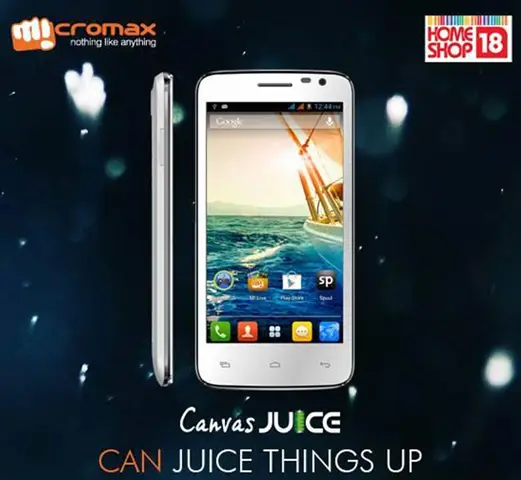
budget segment, Micromax has today officially launched, Micromax Canvas
Juice A77, a smartphone with a 3000 mAh battery. Let’s take a look at
hardware specs to know what can be expected from this device.
Camera and Internal Storage
The Primary camera has a 5 MP sensor supported by LED flash. Various
budget android phones will offer you 8 MP camera in the same price
range, but the Micromax phones in the Canvas Fun series will offer you
similar camera module in this price range. Don’t expect too much from
this camera and you will be fine. The camera is capable of 720p HD video
recording. A VGA front camera is also present for video recording. The internal storage is 4 GB. This is something which is very
standard in budget android phone and is not very impressive. Domestic
manufacturers are slowly evolving towards providing more internal
storage. Out of 4 GB a little less than 2 GB will be available at users
end. The memory can be further extended to 32 GB using MicroSD card.
Processor and Battery
The processor employed is 1.3 GHz Dual Core processor. The chipset
used is MediaTek MT6572 chipset which has been ubiquitous in the budget
segment lately. For a couple of thousand extra you can get quad core
phones like Xolo Q700 and Xolo Q1000 Opus.
The RAM capacity is 1 GB and this is certainly above average. Most
phones offer 512 MB RAM below 10k mark and the inclusion of 1 GB RAM
will definitely provide you with better Android experience. The Battery which is the highlighted feature of this phone has a
capacity of 3000 mAh. The battery carries enough juice to let you
squeeze 10 hours of talk time and 282 hours of standby time. Though the
battery backup is certainly above average, it still falls short of what
is expected of a dual core device on 3000 mAh battery.
Display and Other Features
The Display is 5 inches in size and comes with FWVGA 854 X 480
resolutions and sports 16.7 million colors in this smartphone.
Considering the price range, the display is certainly above average. The
display is similar to what you will get in phones like Micromax Canvas
Fun A76. The phone runs on Android 4.2.2 jelly bean operating system.
Connectivity features include 3G, WiFi, Bluetooth 3.0, microUSB and GPS. Key Specs
Model
Micromax Canvas Juice
Display
5 Inch, FWVGA
Processor
1.3 GHz Dual Core
RAM
1 GB
Internal Storage
4 GB, Extendable
OS
Android 4.2 Jelly bean
Cameras
5 MP/ VGA
Battery
3000 mAh
Price
Rs. 7,999
Conclusion
The phone comes with decent specifications on paper. It overcomes
some major limitations by providing 3000 mAh battery and 1 GB RAM. This
makes it a viable dual core options standing apart from the dual core
crowd. The threatening competition comes from quad core devices which
are slowly and steadily sliding into the budget dual core price range.